

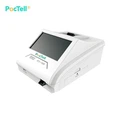


POCT Dry Chemistry
Your Professional POCT Dry Chemistry Supplier
INNOCHEK BIOTECH CO., LTD, are dedicating in delivering comprehensive, efficient, and innovative POCT solutions to global users. The company was stablished in 2017 and headquartered in Hongkong, is a conglomerate seamlessly integrating R&D, production, registration, sales, and marketing. Leveraging microfluidics and electrochemical technologies, INNOCHEK has successfully developed a diverse range of key products, including blood gas and electrolytes, immunofluorescence, coagulation, and animal diagnostic series.


Why Choose Us
A variety of technology development platforms
Our technology development platform includes dry blood gas, electrolyte, microfluidic dry biochemistry, dry coagulation, and liquid phase fluorescence immunoassay platforms.
Diagnostic reagent
Based on the diversity of technology platforms, successfully developed for the detection of specific biochemical markers in biological samples, such as proteins, enzymes, hormones, etc., to help diagnose diseases.
Software and information systems
Software and information systems for data management, interpretation, and reporting to help physicians analyze and understand test results more effectively.
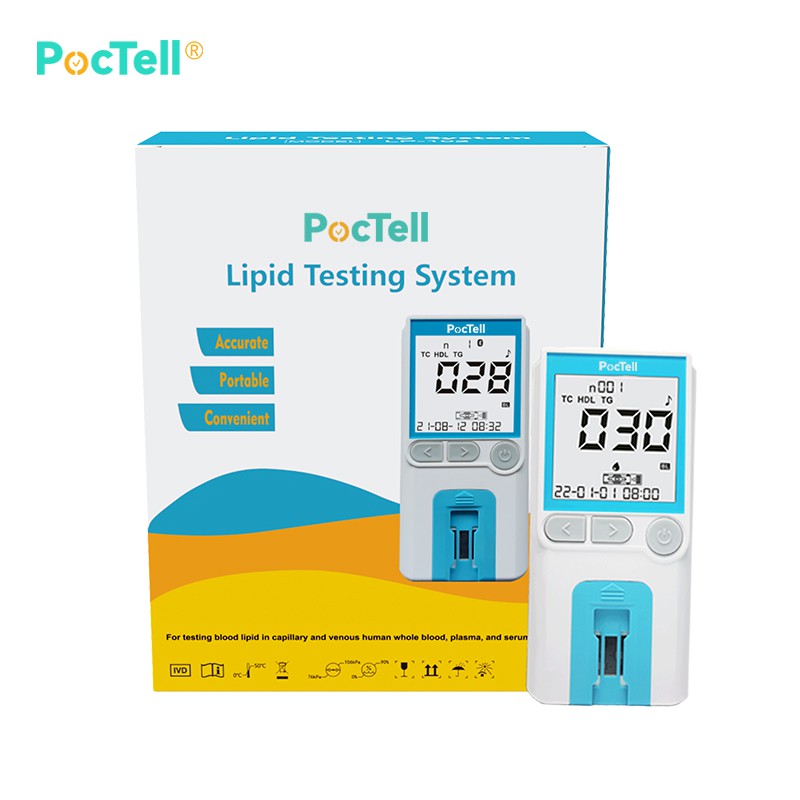
A blood lipid analyzer is a medical device used to quantitatively detect lipid components in the blood. By analyzing indicators such as cholesterol and triglycerides in blood samples, it assesses the body's lipid metabolism status and assists in the diagnosis of health problems such as cardiovascular disease and metabolic syndrome.
|
Feature |
Technical Specifications |
|
Methodology |
Reflectance Photometry |
|
Test |
Total Cholesterol (TC), High Density Lipoprotein Cholesterol (HDL), Triglycerides (TG), the calculated ratio of TC/HDL, Low Density Lipoprotein Cholesterol (LDL) |
|
Test Time |
≤ 2 mins |
|
Measurement Range |
TC: 100- 500 mg/dL(2.59-12.93mmol/L) HDL:15-120 mg/dL(0.39-3.10mmol/L) TG: 45-650 mg/dL(0.51-7.34mmol/L) |
|
Specimen |
Capillary or venous human whole blood, plasma, serum. |
|
Specimen Volume |
10μL for individual tests, 25μL for 3 in 1 test |
|
Power Source |
3AAA(LR03) Batteriesor AC adapter |
|
Battery Life |
≥85 hours or 1,000 tests |
|
Units of Measurement |
Mg/dL, mmol/L |
|
Memory |
200 records with Date/Time |
|
DataTransfer |
MiniUSB Bluetooth (only for model LP-102) |
|
Automatic Shut Off |
5 minutes after last use |
|
Meter Dimensions(L×W×H) |
142mm×70mm×27mm(5.59"×2.76"×1.06") |
| Display Dimensions(L×W) | 50mm×50mm(1.97"×1.97") |
|
Weight (without batteries) |
130g(4.59oz.) |
|
Storage Conditions |
Meter:0-50ºC (32-122ºF);Test Strips:2-30ºC (36-86ºF) |
|
Operating Conditions |
15-40ºC(59-104ºF) |
》A single drop of blood for measuring four lipid parameters: total cholesterol, triglycerides, low-density lipoprotein, high-density lipoprotein
》Bluetooth transmission
》Results available within 2 minutes
》Abnormal test result alerts
》Large-screen high-definition display
》Voice prompts for easy operation
》The large memory storage can store 200 sets of data.
》The test strips are packaged separately for easy storage and no waste.
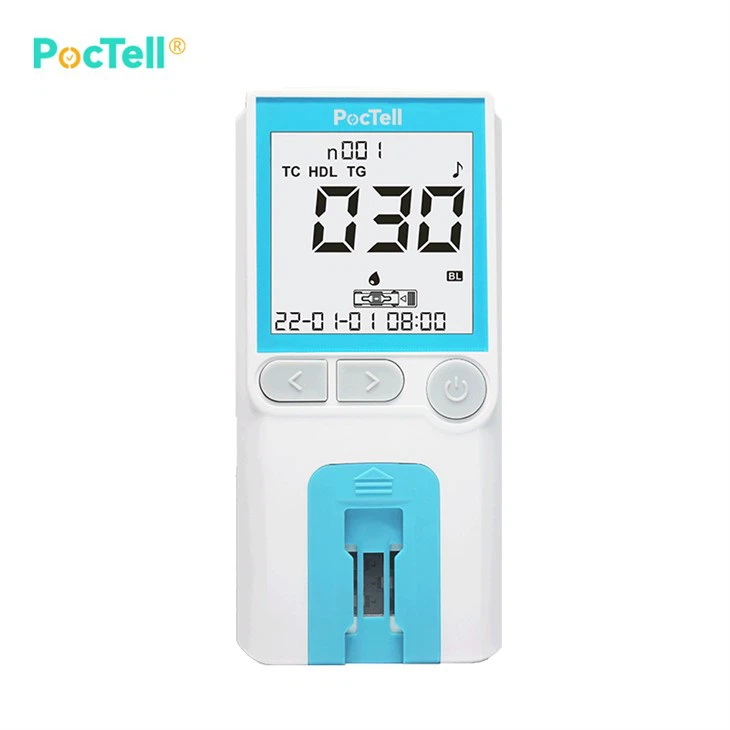
Type of Blood Lipid Analysis Meter
Dry chemical analyzers
A blood sample is applied to a test strip, where a chemical reaction produces a color change, which is then quantitatively analyzed by an optical sensor.
Wet chemical analyzers
A blood sample is mixed with a reagent and quantitatively analyzed using colorimetry, enzymatic analysis, or immunoturbidimetry.
Portable lipid analyzers
Combining dry chemical analysis with microfluidics, they achieve miniaturization and multi-parameter testing.
Applications of Blood Lipid Analysis Meter
Home health monitoring
Regular self-testing for patients with high blood lipids, obese individuals, and the elderly.
Primary healthcare facilities
Rapid screening at community health centers and clinics.
Physical examination centers
Lipid testing during pre-employment and health checkups.
Hospital clinical settings
Rapid lipid assessment in emergency rooms, ICUs, and other settings.
Operating Procedures of Blood Lipid Analysis Meter
(1)Before using the lipid analyzer, the following items need to be prepared: lipid analyzer, lipid test card, blood collection pen, blood collection needle, disposable micro blood collection device, and alcohol swab.
(2) Use the normal working mode of the instrument to measure blood lipids. (Please confirm that you are using the blood lipid test card that comes with the instrument before use to avoid using the wrong one.) (All the illustrations are for example. Please refer to the product for details.)" When using the lipid analyzer for the first time, open the battery cover and install three AAA batteries according to the correct markings. Pay attention to the direction of battery installation. For details, please refer to the "Battery Installation and Usage Instructions". For the first use, you need to set the time, voice and Bluetooth switch information. If you need to adjust the voice and wireless communication functions, please refer to the steps in "How to Set Time, Voice and Wireless Communication"
Step 1:Read the calibration card
Insert the calibration card in the lipid test card packaging box into the calibration card slot of the instrument. (Note: Each packaging box comes with a calibration card. Please be sure to use the matching lipid test card and calibration card. When the calibration codes are inconsistent, it will cause significant measurement errors.)" Press and hold the power button for a long time. After turning on the device as shown in the following figure, check whether the correction code in the result area of the display screen is consistent with the correction code value on the lipid test card packaging bag. If there is any inconsistency, please stop the test, take out and replace the calibration card with one that matches the calibration code value on the lipid test card packaging bag, and then continue the test. (Note: The correction codes shown in the picture are all for example. The correction codes on the actual lipid test card packaging should be taken as the standard.)"
Step 2: Insert the lipid test card
Take out a blood lipid test card. If the icon of the blood lipid test card on the instrument screen keeps flashing, insert the blood lipid test card in the correct direction. After the lipid test card is inserted, the icon on the lipid test card no longer flashes. When the blood drops on the screen start to flicker, it indicates that a blood sample can be added. Please do not touch the reaction area and sample addition area of the lipid test card with your hands. Please complete the blood collection and blood addition steps within 5 minutes; otherwise, the instrument will automatically shut down.
Step 3: Disinfection
1. Remove the disinfectant cotton swab and alcohol (alcohol disinfectant cotton pad). Note: 75% medical alcohol should be used. Disinfectants containing "carbon" or "chlorine" are strictly prohibited to avoid measurement errors.
2. Dip a sterilized cotton swab in an appropriate amount of alcohol. Choose one side of the pad of your middle or ring finger and rotate the disinfectant swab from the inside out to apply alcohol. Disinfect the blood collection site and the blood collection device. Do not repeatedly roll the cotton swab to avoid affecting the disinfection effect.
Note: 75% medical alcohol is flammable and explosive. Do not come into contact with open flames. Keep away from flames when using alcohol. The large bottles of alcohol purchased can be divided into small bottles for use to reduce the risk of combustion.
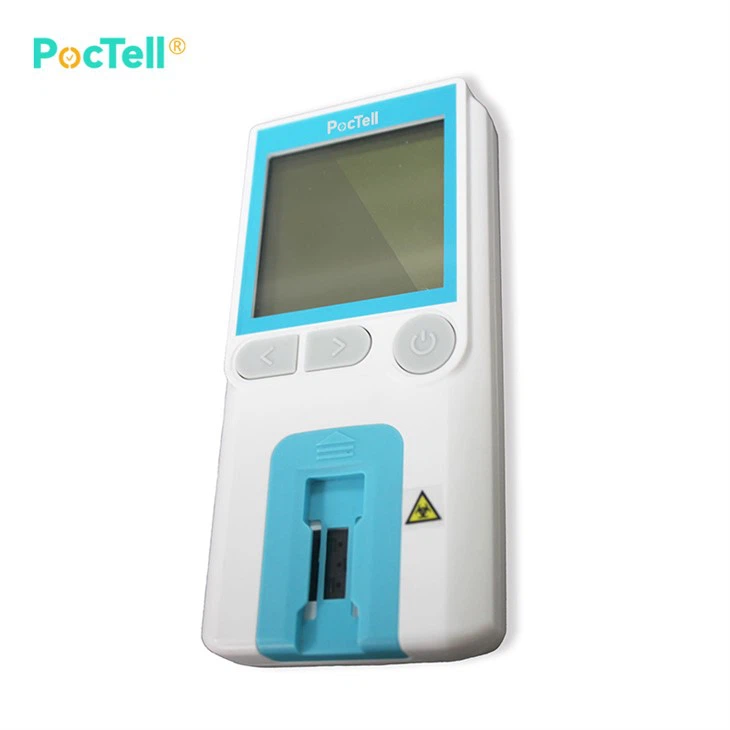
Types of samples used and collection methods
The applicable sample types are whole blood (venous blood or capillary blood), whole blood with EDTA anticoagulation or heparin anticoagulation.
Capillary blood collection method: Use a disposable peripheral blood collection needle with a safety lock card or a blood collection pen equipped with a disposable sterilized blood collection needle to puncture the finger, and then use a disposable microblood collection device to collect blood.
Venous blood collection method: Venous blood collection is carried out by professional medical staff.
Blood without anticoagulants must be tested as soon as possible after collection. Blood containing anticoagulants must be used within 8 hours after collection at 20ºC to 25ºC. Hemolytic samples can lead to inaccurate results.
If the blood sample is not to be tested temporarily, it should be stored at 2ºC to 8ºC for no more than 72 hours. Before testing, the blood should be fully temperature-balanced in the testing environment to ensure that the blood temperature reaches the temperature of the testing environment. Before testing, the samples in the container should be thoroughly mixed.
Note: Disposable peripheral blood collection needles with safety lock cards do not require blood collection pens. The following are the capillary blood collection methods. One of them can be used.
Take out the prepared blood pen and make sure that the alcohol on the finger area to be disinfected is completely dry.
(Note: Wet alcohol can cause measurement errors. The blood collection pen is for personal use only and must not be shared by multiple people. Blood collection needles can only be used once.
Press the front end of the blood collection pen vertically against the disinfected area of your finger and apply force.(Hint: Keep the pen vertical and press it firmly against the skin.)" Blood Lipid Analyzer
Press the blood pen button. At this point, the needle will Pierce out.
Then gently press around the blood collection wound to form an appropriate amount of blood beads.
(Note: Do not apply excessive force to avoid excessive exudation of body fluids and tissue fluids, which may cause measurement errors.)
Display the results
After the blood sample was added, the instrument began to automatically detect and run the test animation, as shown in the following figure. During the instrument testing process, please do not move the instrument or the lipid test card or press any buttons or perform any other operations.
After the test animation starts running, the test results will be displayed within 2 minutes. Press the S key and M key briefly to continuously query the three detection values of total cholesterol, high-density lipoprotein cholesterol, and triglycerides, to test the interface and the ratio of total cholesterol to high-density lipoprotein cholesterol, as well as the value of low-density lipoprotein cholesterol calculated based on these three detection values.
Total cholesterol, high-density lipoprotein cholesterol, triglycerides, and low-density lipoprotein cholesterol are measured in units of mmo/L.
When checking the results after the test, please do not remove the lipid test card. Once removed, the test will automatically proceed to the next test.
After the test is completed, if any of the three test results - total cholesterol, high-density lipoprotein cholesterol, or triglycerides - is high, it will show Hi; if it is low, it will show Lo.
Environmental Conditions Required for Blood Lipid Analysis Meter
- Ambient temperature: +15°C to +40°C;
- Relative humidity: ≤8096;
- Atmospheric pressure: 860hpa to 1060hpa;
- Power supply for the instrument: 4.5V DC (3 AA AAA batteries).
FAQ
As one of the most professional poct dry chemistry manufacturers and suppliers in China, we're featured by quality products and good price. Please rest assured to buy cheap poct dry chemistry in stock here from our factory.
Urine Test Analyzer, Urinalysis Reagent Test Strips, MicroCuvette Kit