



Why is Chikungunya IgG IgM Rapid Test necessary?
In 2025, chikungunya fever outbreaks appeared to be spreading globally, primarily in Africa, Southeast Asia, and South America. As of August, Foshan City, Guangdong Province, China, had reported over 2,285 local cases, with Shunde District accounting for over 95% of these cases. The outbreak also affected 12 other cities, including Guangzhou and Zhanjiang. Globally, large-scale infections have also occurred in Brazil and the French Réunion, with Brazil reporting over 75,000 confirmed cases and Réunion reporting 15 deaths. The spread of the epidemic is closely linked to mosquito-borne activity. Stagnant water caused by typhoons during the flood season provides a breeding ground for Aedes mosquitoes. Combined with frequent international travel, the risk of imported cases persists.
Chikungunya fever is caused by the chikungunya virus (CHIKV), an RNA virus of the alphavirus genus. It is primarily transmitted through the bites of Aedes aegypti and Aedes albopictus mosquitoes. The virus has a short replication cycle in mosquitoes (approximately 10 days) and can be transmitted vertically from mother to child or through blood transfusions.
In response to the outbreak, primary medical institutions urgently need detection tools that can quickly distinguish the stages of infection.Get results in 15 minutes to help you quickly respond to the epidemic.
Advantages of the Chikungunya IgG IgM Rapid Test
IgM antibodies: Detectable 3-4 days after onset, with a peak positive rate on day 5 of illness, indicating acute infection.
IgG antibodies: Appearing 5-8 days after onset, elevated titers indicate convalescence or prior infection, and can be used for epidemiological screening.
Combined testing: Using dual antibody capture technology, the test simultaneously determines the infection stage within 15 minutes, significantly outperforming single antibody testing.
Using colloidal gold immunochromatographic technology, the test simultaneously detects IgG and IgM antibodies, distinguishing between acute infection (IgM+/IgG-), convalescence (IgM±/IgG+), and prior infection (IgM-/IgG+), avoiding misdiagnosis based on a single indicator.
Sample types: Supports whole blood, serum, and plasma, requiring only 20μL of blood, making it suitable for children and patients with difficult venipunctures. Suitable for Specific Populations: A low-concentration detection threshold (IgM ≥ 10 U/mL) has been designed for neonatal infection, enabling identification of early cases of mother-to-child vertical transmission.

What applications is this test kit suitable for?
Applications: CDC screening / Hospital emergency testing / Newborn screening / Cross-border procurement, etc.
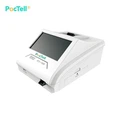
We currently offer the PocTell® Chikungunya IgG/IgM Rapid Test Kit (CE certified), supporting bulk purchases and customized packaging.
Contact us now for customized packaging solutions.