



Today, we will review the key differences between normal cardiac troponin I (cTnI) and high-sensitivity cardiac troponin I (hs-cTnI) assays and explain why hs-cTnI is more clinically valuable.
| Key Differences Between cTnI and hs-cTnI | normal cTnI | hs-cTnI |
| A. Sensitivity | ● Limited sensitivity, detecting only at higher concentrations. | ● Can detect extremely low concentrations of troponin I, with a sensitivity improvement of 10-100 times. |
| B. Limit of Detection (LOD) | ● The LOD is typically 0.1–0.5 ng/mL. | ● The LOD can reach 0.001–0.01 ng/mL. |
| C. Early Detection Ability | ● Levels do not rise significantly until approximately 6–12 hours after a myocardial infarction. | ● Elevations can be detected 1–3 hours after infarction. |
| D. Dynamic Monitoring Capability | ● Difficult to continuously assess subtle changes. | ● Can detect slight increases or decreases over short periods of time, making it more suitable for dynamic monitoring. |
| E. Diagnostic Window | ● Often fails to detect small or mild myocardial damage. | ● Can identify subtle myocardial damage, such as in stable coronary artery disease, heart failure, and myocarditis. |
| F. Reference Population Coverage | ● In healthy individuals, levels are typically undetectable (zero). | ● Detectable in a large proportion of healthy individuals (>50%), facilitating the establishment of a personalized baseline. |
| G. Risk Stratification Capability | ● Primarily used to confirm the diagnosis of acute myocardial infarction. | ● In addition to confirming the diagnosis, it can also be used to predict cardiovascular risk (long-term heart failure, progression of coronary artery disease, and risk of sudden death). |
| H. Application Value in the Emergency Department | ● Requires a long wait time to rule out/confirm MI. | ● Combined with a 0/1 hour or 0/2 hour screening process, it can quickly rule out AMI in the emergency department, significantly shortening observation time. |
| I. Guideline Recommendations | ● Increasingly considered insensitive, its application is limited. | ● Recommended as the preferred choice by international guidelines such as the European Society of Cardiology (ESC) and the American Heart Association (AHA). |
| J. Widespread Clinical Application | ● Almost exclusively used to confirm/rule out suspected MI. | ● Not only for MI, but also for heart failure, chemotherapy cardiotoxicity monitoring, exercise cardiac assessment, and assessment of cardiovascular complications of renal disease. |
Why hs-cTnI testing is even more important
It can detect myocardial damage earlier, thus increasing time for treatment and reducing mortality.
It can rule out acute myocardial infarction faster, reducing emergency room stays and improving efficiency.
It can monitor the risk of chronic heart disease, moving from simple "diagnosis" to "prevention and management."
It has become the preferred choice in international guidelines, representing a leading standard.
It can be used in a wider range of clinical scenarios, not just for myocardial infarction, and has greater clinical value.
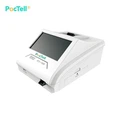
Overall, hs-cTnI is not just a more sensitive test; it has become a core tool in modern cardiovascular disease management. Our POCTELL® brand Cardiac Troponin I fast test kit can detect hs-cTnI, providing clinicians with timely reference. Furthermore, our Cardiac Troponin I fast test kit has no MOQ restrictions and can also be customized for OEM. Distributors interested in hs-cTnI can contact us at any time.