

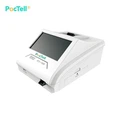


Sample preparation:
Sample collection: Collect samples such as blood, tissue, saliva, and urine according to the purpose of the experiment.
DNA extraction: Use a dedicated DNA extraction kit to extract DNA from the sample.
PCR reaction preparation:
Design primers: Design specific primer pairs based on the target sequence for amplification of template DNA.
Prepare reaction mixture: Including template DNA, primers, buffer, DNA polymerase, dNTPs (deoxynucleoside triphosphates), Mg2+, etc.
Set PCR program:
PCR instrument settings: Enter the preset PCR cycle parameters, such as 95°C preheating temperature, denaturation temperature (such as 95°C), annealing temperature (such as 55°C), extension temperature (such as 72°C), and number of cycles.
PCR reaction:
Add sample: Add the reaction mixture to the PCR reaction tank or chip, and each sample usually has one reaction well.
Perform PCR: The PCR instrument cycles according to the preset program, including heating, cooling, annealing, and extension steps.
Product analysis:
Cooling after amplification: After PCR is completed, the sample is briefly cooled at 4°C.
Electrophoretic separation: Use gel electrophoresis technology, such as agarose gel electrophoresis, to separate PCR products of different lengths.
Fluorescence scanning: Fluorescently labeled primers emit light of a specific wavelength in the amplified product, and the PCR instrument reads these signals and records them.
Data processing and interpretation:
Data analysis software: Use specialized software to analyze the fluorescent signal and calculate the concentration or relative concentration of the target fragment.
Result interpretation: Based on the PCR curve and baseline, determine whether the PCR is successful, whether the target fragment exists, and how much it is.
Result recording and preservation:
Record the results in the experimental report and properly preserve the original data and samples.